Living with a chronic condition—whether it’s arthritis, diabetes, heart disease, or COPD—can bring daily challenges. But with the right habits, tools, and mindset, it’s absolutely possible to live a full and meaningful life.
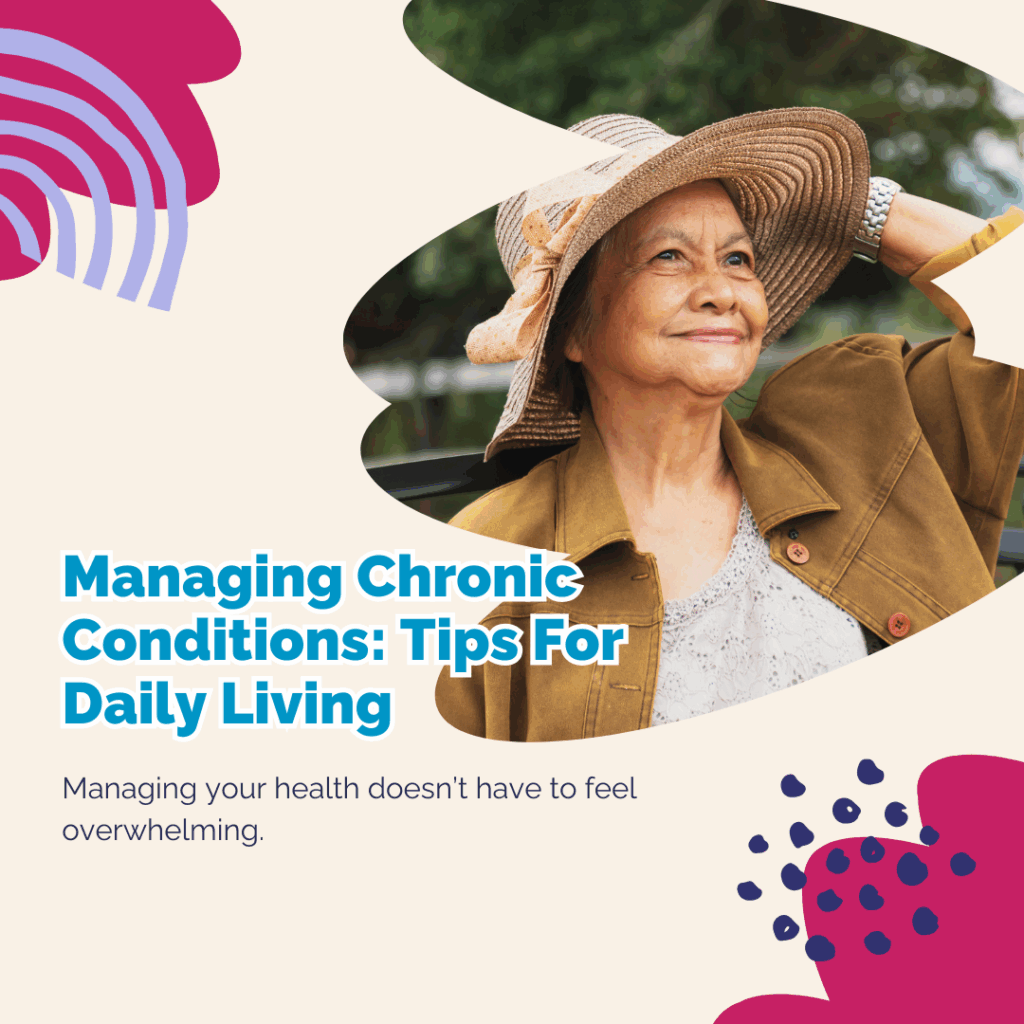
Managing your health doesn’t have to feel overwhelming. Small daily choices can make a big difference in how you feel and function. Here are some practical, easy-to-follow tips to help you take control of your condition and feel your best every day.
1. Stick to a Routine That Works for You
Consistency is key. Try to wake up, eat meals, take medications, and go to bed around the same times each day. A steady routine helps your body find balance and makes it easier to remember important tasks like medications, hydration, or light movement.
Tip: Use a daily planner, set phone reminders, or keep a checklist to stay on track.
2. Take Medications as Prescribed
It’s easy to miss a dose, especially when multiple medications are involved. But staying on schedule is one of the most important ways to manage your condition and avoid complications.
Tips:
- Use a pill organizer to sort medications by day and time.
- Set alarms or download a medication reminder app.
- Don’t hesitate to ask your pharmacist about medication interactions or side effects.
3. Keep Moving—Even a Little Bit Helps
You don’t need to run marathons to stay healthy. Gentle movement, like walking, stretching, chair yoga, or tai chi, can help with circulation, flexibility, pain management, and mood.
Tip: Talk with your doctor before starting any new exercise program, and start slow. Just 10–15 minutes a day can be a great beginning.
4. Eat for Energy and Healing
A balanced, nutritious diet is one of your best tools for managing a chronic condition. Try to focus on whole foods: fruits, vegetables, whole grains, lean proteins, and healthy fats.
Tips:
- Stay hydrated throughout the day.
- Limit processed foods and sugary drinks.
- If needed, work with a nutritionist to tailor a plan to your condition (e.g., low sodium for heart health, low sugar for diabetes).
5. Listen to Your Body
Some days are better than others—and that’s okay. Pay attention to warning signs like fatigue, swelling, dizziness, or shortness of breath. These can signal that your condition needs more attention.
Tip: Keep a simple health journal where you track symptoms, meals, mood, and activity. This can help you and your doctor spot patterns.
6. Stay Connected
Living with a chronic condition can feel isolating at times, but you are not alone. Stay connected to friends, family, support groups, or your faith community.
Tip: Join an online or in-person support group for people with similar conditions. Sharing experiences can bring comfort, encouragement, and practical tips.
7. Prioritize Sleep and Rest
Sleep plays a huge role in healing and managing stress. Try to get 7–9 hours of restful sleep each night.
Tips:
- Keep a consistent bedtime.
- Limit screen time before bed.
- Talk to your doctor if you’re having trouble sleeping—there may be a simple solution.
8. Don’t Skip Check-Ups
Regular visits with your healthcare provider are essential for monitoring your condition and adjusting your treatment plan as needed. Bring a list of questions or symptoms with you to make the most of each visit.
9. Focus on What You Can Do
Living with a chronic illness may mean making adjustments, but it doesn’t mean giving up on your interests or joy. Whether it’s gardening, painting, reading, or walking your dog—make space for the things that bring you happiness.
Final Thoughts
Managing a chronic condition is a journey—but you don’t have to walk it alone. With the right support, daily habits, and a bit of patience, you can live a rich, fulfilling life while caring for your health.
Remember: Small steps every day add up to big improvements over time. Be kind to yourself. You’re doing better than you think.